Use case
An answer on your screen while the question is still hanging
MuteHint listens to the interviewer, picks out the question and shows a short answer you can say, built from the CV and job description you gave it.
The Interview profile is in the free plan: 2 sessions a week of 15 minutes each, no card needed. A paid plan, from $25, runs a full-length interview.
- No card needed
- macOS and Windows
- 7-day money-back guarantee
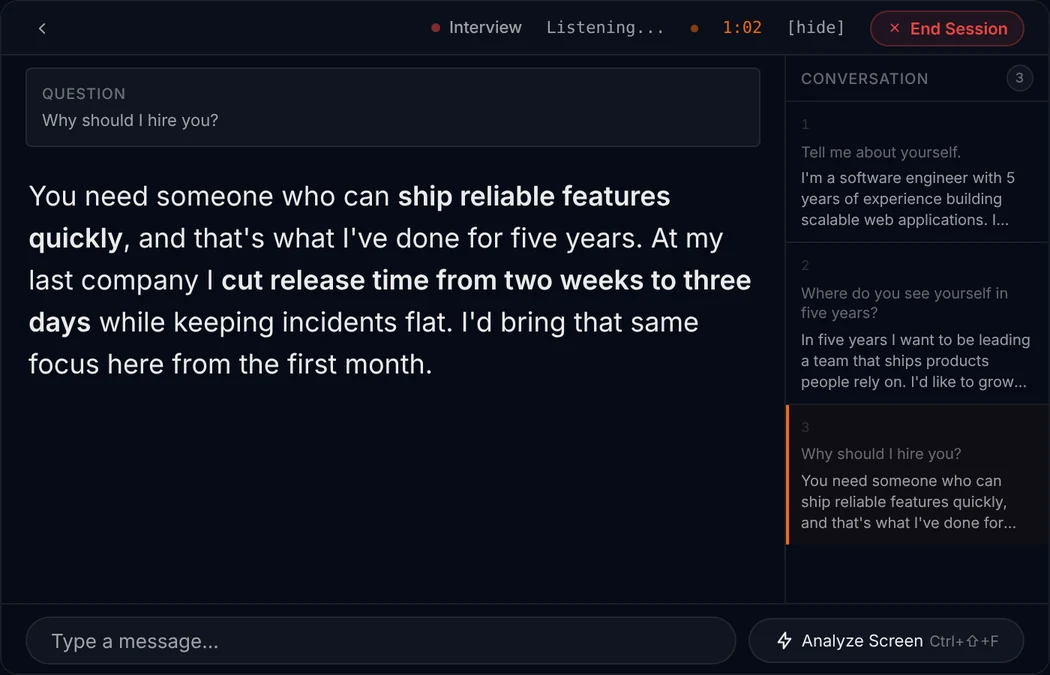
What you see during the call
Three things, the same on every call. No scores, no labels, no checklist to read.
1
The question that was just asked
MuteHint listens to the other side of the call and picks out the question. It shows it in a small Question box, so you can check it heard the same thing you did.
2
A short answer you can say
Below the question is a few sentences in plain spoken language, with the key phrases in bold. Read it at a glance, then say it your way.
3
The next step, when you ask
Press Ctrl+Enter (Cmd+Enter on a Mac) and it gives you the next step. A Conversation panel keeps the questions asked so far.
For example
They ask: “Tell me about a time you handled a conflict.”
Two leads on my team disagreed about a launch date. I split the scope into two releases so both could ship what mattered to them. We launched on time, and the two of them planned the next release together.
Make it about you
Give it your CV and the role
Before the interview, choose the Interview profile and paste in what the answers should be built from.
- Your CV, so answers use your real roles, projects and numbers.
- The job description, so answers point at what this role asks for.
- Two or three stories you want to tell, in your own words.
The text you paste is sent to your AI provider and saved with your session on MuteHint's servers.
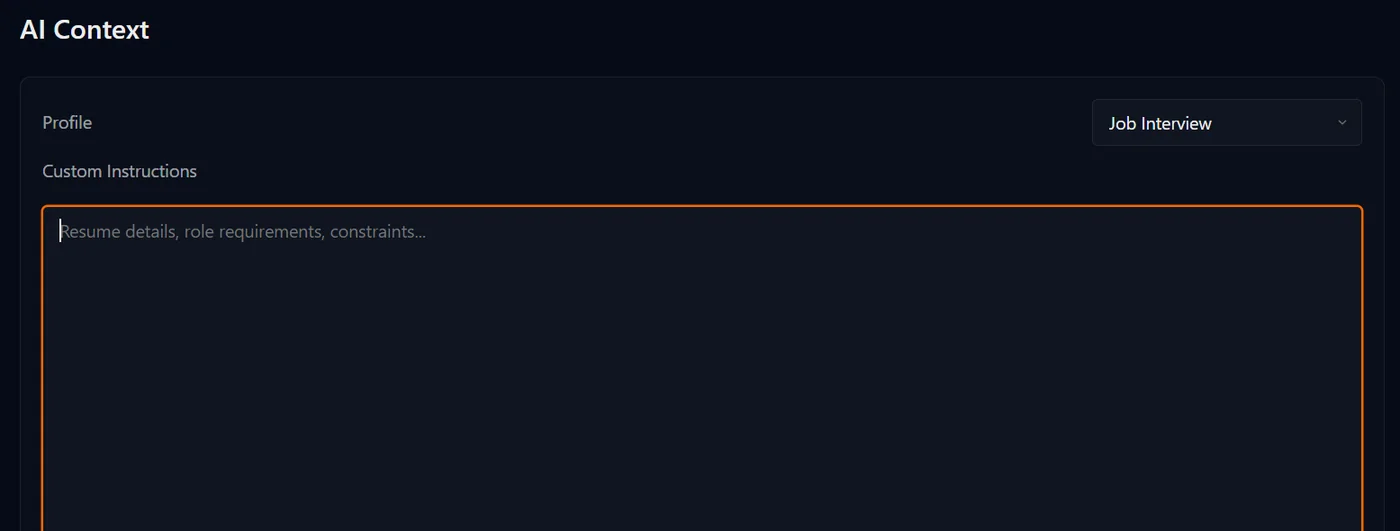
Set up before the call
Step 1
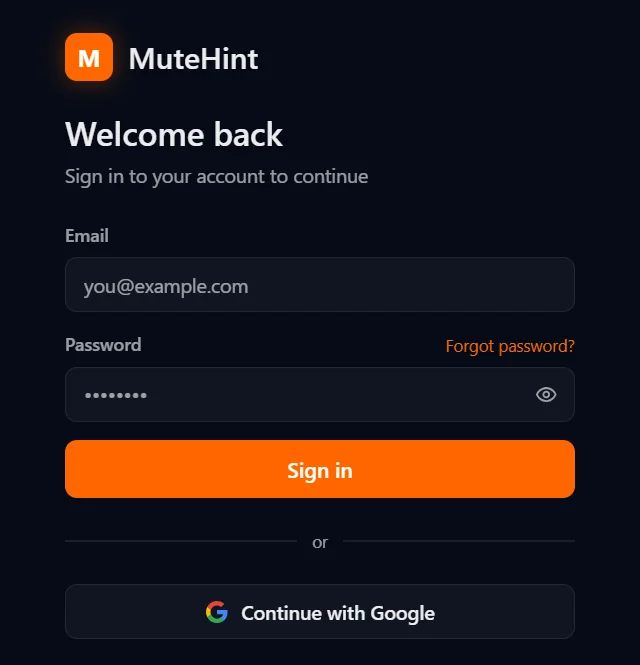
Create a free account
Sign up, then download the app for macOS or Windows from your dashboard. Sign in with your email or with Google.
Step 2
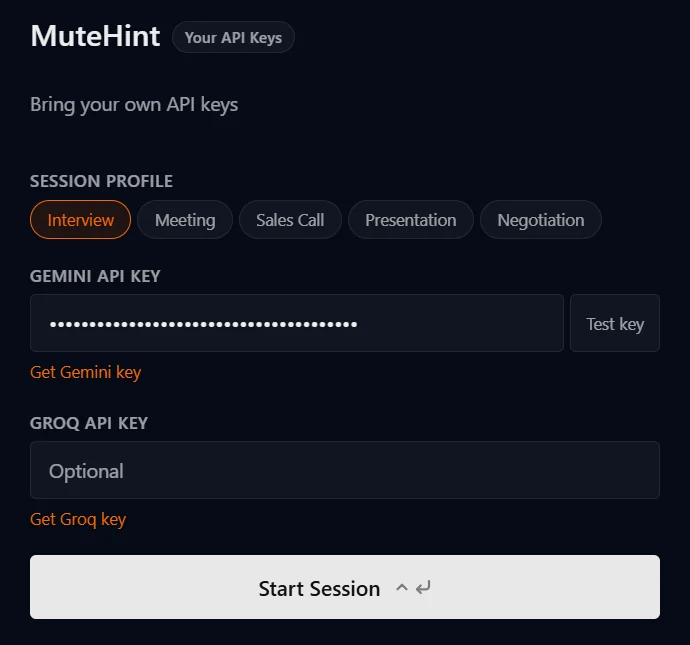
Add your own AI key
Paste a Gemini API key from Google AI Studio into the app and test it with one click. You pay Google directly, with no markup from us.
Step 3
Pick a profile and join
Start a session before your call. MuteHint listens, picks out the question you were just asked and puts an answer you can say on screen, with the key phrases in bold.
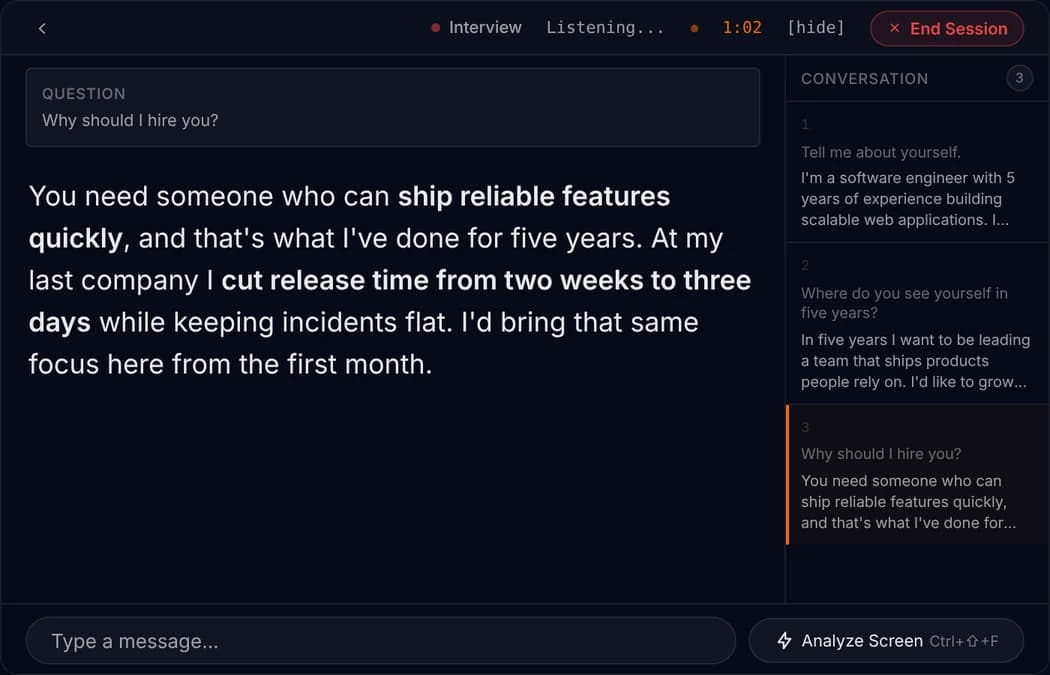
Example session. The question and answer are samples, shown on the app's live screen.

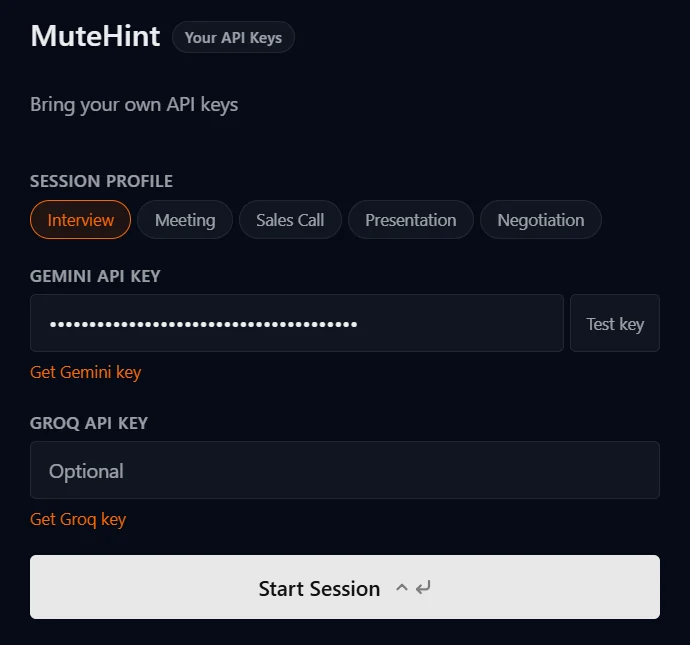
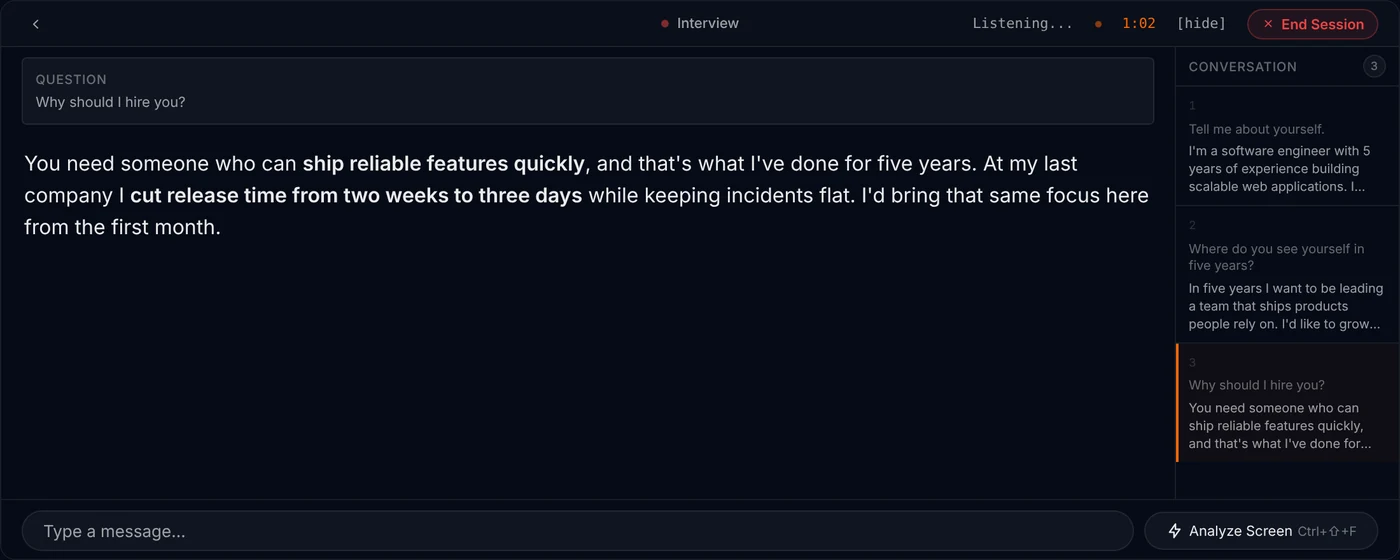
Try one short practice session before the real interview, so the window sits where you want it. On the free plan, a practice session that runs for a minute or longer uses one of your 2 weekly sessions.
Prepare your stories. Use the app for the blank moments.
Most interview answers go wrong in the first few seconds. The question lands, your mind goes looking for the right story, and you start talking before you have found it. A suggested answer on screen gives you a place to start. It does not replace knowing your own work.
So do the preparation anyway. Write down four or five things you have done that you are proud of, with what you did and what changed because of it. Paste them into the context box with your CV and the job description. During the call, read the suggestion, then say it your way and add the detail only you know. If the suggestion gets a fact wrong, ignore it. You are the one who was there.
One more thing. Some employers say plainly that AI help is not allowed in their interviews. If yours does, respect that rule.
Questions people ask before they try it
Can the other side see MuteHint during my call?
No. The hint window appears only on your screen, and MuteHint never joins the call as a participant. Click-through mode (Ctrl+M, or Cmd+M on a Mac) lets your mouse keep working with the call underneath, and Ctrl+\ (Cmd+\ on a Mac) hides the window instantly.
What happens when I share my screen?
MuteHint asks your operating system to leave its window out of screen sharing and recording, so you can share your whole screen. Before a call that matters, share your screen once with a friend or a second device and check. If the window ever shows up on your setup, Ctrl+\ (Cmd+\ on a Mac) hides it while you share.
Is the free plan really free?
Yes. You get 2 live sessions a week with the Interview profile, on one device. Each session lasts up to 15 minutes. No card is needed. Paid plans add all 5 AI profiles, unlimited sessions with no time limit, screen capture and session history.
Can I give it my CV or my pitch?
Yes. Paste your CV, the job description, your pitch or your notes into the context box before you start. The AI uses it to write answers that sound like you.
Is using MuteHint during interviews cheating?
MuteHint puts a suggested answer on your screen while you talk. Whether that is acceptable depends on the rules of the situation you are in. Most sales calls, meetings and negotiations have no rule against notes or help. Where an interview, a test or an employer has an explicit rule against AI help, you should respect that rule, and our Terms do not allow use where it is prohibited.
Is there a separate profile for technical interviews?
No. There is one Interview profile and it is used for every kind of interview. It answers the questions the interviewer asks out loud. On paid plans, the Analyze Screen button can also read a problem from one screenshot of your screen when you press it.
Your next call is coming either way. Take a coach in with you.
Two free 15-minute sessions every week. Set up before your call starts.
No card needed. Paid plans from $25, with a 7-day money-back guarantee.